Mister Tiger, 30, shares his experience of dealing with the loss of a baby from a miscarriage and the purpose of having a support network to get through challenging times.
What does
mental health mean to you?
Mental health is
just as serious as physical health, but it doesn’t get the attention it
deserves within our society, the workplace, school or in some personal
relationships. Don’t get me wrong, there are positive changes around the stigma
attached to mental health and there are people that ‘preach the Gospel’ within
their communities and the world but there still is a lot of change that needs
to come. I want to live in a society that encourages people to be open to speak
about their story and not feel the shame or regret that follows this position
of vulnerability
Going back to
your point about mental health in the workplace, how can we challenge the
stigma?
Personally, I’ve
had a good experience at work over the past few years, but I think that’s
because the organisation I work for has a heavy focus on mental wellbeing. They
have regular seminars and events throughout the year that focuses on mental
health for men, women, ethnic minority groups, parents and the list goes on. At
the same time, I know organisations that rarely focus on the topic of mental wellbeing,
but I don’t really know why. Essentially, we need create an open space for
people to openly discuss the challenges of dealing with mental health and it’s
okay to take time off to ‘recharge’. We encourage people to take the time to
recover from a physical injury, but the same consideration should be given to
someone that is dealing with depression or anxiety. From personal experience of
dealing with depression, after a few weeks of isolating myself in my bedroom
and combining that with thoughts of ‘people do not give a sh*t if I was alive’,
‘no one cares about my opinion so what’s the point of being here’ or ‘I deserve
to feel this way’ – as a result, it totally affected my physical health! I
didn’t look after myself and I felt sh*t. So ideally, we need to speak about
mental health openly without the fear of feeling persecuted for feeling this
way. I do feel that things are changing within modern society but like I said,
there is a lot of work to be done.
Has it been a
challenge for you to open up in the workplace?
Yeah it can be
quite difficult to open up especially in a professional environment, but I
guess it all comes down to finding someone that I can feel comfortable enough
with to share my thoughts and emotions in a way that doesn’t make me feel too
vulnerable.
What has been
one of the major challenges you have faced recently?
I’ve been married
for around five years now and happily I might add. She’s a great woman, and a
best friend that accepts me for my weirdness and quirks without flinching. It
helps that she’s comfortable to be herself with me and not worry about social
norms, so she can be just as weird as me behind closed doors. Last year we had
the discussion of whether to start trying for a baby. I’ll have to admit, the
first time she asked me, I felt that churning feeling in my stomach. Not out of
fear but more like woah are we ready for this? I mean, the conversation
continued, and we came to a decision that we would start trying in the second
half of 2019. So, we started in September and boom, she got pregnant by
October! I thought to myself, damn well-done strong swimmers! She was four
weeks in when I found out and we were over the moon with the news. From that
day onward, we started planning and formulating ideas in our heads of how we
would break the news to our family and friends. We started talking about names,
gender and ideas for the nursery. There was not a conversation that went by
where we didn’t discuss something about the baby. Everything was going so well,
my wife was happy and healthy, taking all the necessary pregnancy vitamins that
she needed. This was our future, our plan and I felt that I was ready for this!
November 25th
2019, a normal day at work. Meetings, dealing with queries, making a cup of a
tea in the kitchen and a quick chat waiting for my brew and then I received a
text message at 16:30 saying:
‘something is not right, I’ve been bleeding
throughout the day, I’m going to make my way to the hospital’.
‘I’m on my way’
I felt as if I
were slapped across the face with a handful of confusion, a pinch of sadness
and a whole load of fear. I rushed out of the office and made my way to the
closest station to the hospital so I could meet my wife. We both made our way
to the walk-in centre (followed by another two hours in the urgent care centre)
and waited for a few hours to be seen by a doctor who took a pregnancy test and
lifted up our spirits to say, ‘the baby is still in there’. The doctor booked
us in for an ultrasound scan at the early pregnancy unit the following day at
9:30am. I can’t explain how the night before the scan was but all I can
remember is that I was praying for this baby. Praying that everything will be
okay.
November 26th
2019, I remember sitting in the reception area next to my wife, my mouth was
dry, and I was struggling to breathe. The consistent speed and rhythm of my
tapping foot matched the speed of the thoughts running through my head. And
then my eye caught on to a couple that was coming out of one of the scan rooms
and they made their way to the reception desk where the receptionist asked them
to complete a feedback survey and while they were doing this, the receptionist prepared
an envelope with a letter and two leaflets and then handed this parting gift
over to the couple. My heart dropped, all I could think was, receiving that
envelope must be a bad sign, it must have something in it that isn’t good news,
God please don’t let them give me that envelope. We were called through to the
room and run through the standard script before my wife had the ultrasound
scan. After the scan, the nurse told us to come and sit down when we were
ready. She went through the results of the scan and told us ‘we could not find
a heartbeat’. The baby was dead. We both nodded and agreed with everything that
the nurse was saying. So much information to take in within such a short time.
I remember leaving the hospital, coming home and sitting on the sofa watching a
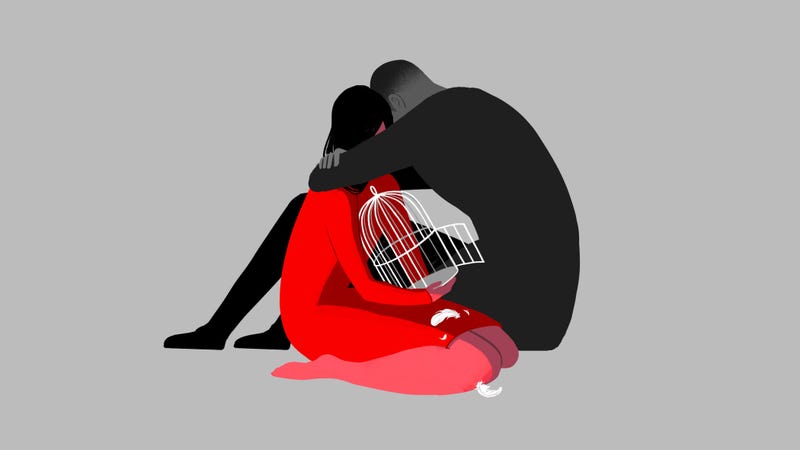
Netflix show. After a few hours of sitting there, it hit us. We started to break
down in tears, and we sat there just holding each other in comfort. Even
talking about this right now, my throat is tightening up because it was such a
vulnerable time for the both of us. The days following this felt like so
surreal. Twenty-four hours before this I was a father and then in a blink of an
eye, that title was ripped away from me and I was left with just memories. It’s
weird right, I only knew about this baby for three weeks. Only twenty-one days
and I had this indescribable feeling of love and connection towards it. Within
such a short time I started to formulate plans for the future - the first day
we would go to a museum, when we would go to a Comic Con together, getting them
ready for their first day of school and the dreams go on. But this was all
erased from my mind now. All I could think about were the questions ‘why us?’,
‘what did we do to deserve this?’. The days went by just as normal; I didn’t
feel anything and neither did my wife. We kept ourselves busy by meeting up
with friends and family in the coming weeks. We dealt with the loss by just
carrying on with life as normal and talking to each other as it never really
happened. Whenever we did talk about it then it was just only just acknowledged
that we accepted it has happened and we need to look ahead. I’m not sure if
this was the best approach or not but it worked for us. I had days when I would
lay in bed crying and it hurt, it hurt so much but I could not have done this
without my wife. The whole experience made our relationship much stronger, the
fact that we were riding the waves of this storm together meant that we were
going to come out of it together.
We chose not to
tell our parents because we thought it would break them, but I knew that this
was not something I could deal with on my own. I needed support and I needed a
shoulder to cry because I didn’t want to burden my wife with all of my emotions
and sadness, especially when I know that she was not only going through trauma
emotionally but also physically and with her hormones. Don’t get me wrong, she
is much more of a stronger character than I am, but I still felt like I didn’t
want to burden her with everything that was running through my mind. Regardless
of how I was feeling, I wanted to be the emotional and mental support pillar
she needed and for me that was number one priority above all, even above my
mental wellbeing. The one thing I made sure I stuck with was constantly telling my wife not to blame herself. She is beautiful, independent and has a strong willpower but I felt that I needed to keep telling her this so that she wouldn't allow the negative thoughts in her mind to become strongholds.

Did you
eventually reach out to anyone for support during this difficult time?
Actually, that
same night we went for the scan, I video called a close friend and told him
what had happened. I was able to bare all my thoughts, emotions and rationale
with this friend. He was exactly what I needed, someone that would willing to
just listen to everything that I was saying. The following day while I was
work, I contacted another friend and I told him I had some news to tell him and
he actually started to get quite excited over the phone because he thought I
was going to tell him good news, that we were having a baby but as I heard the
excitement in his tone of voice, I started to cry and I could not get the words
out. His tone over the phone immediately changed as he noticed how I was
struggling to breathe and get any words out. In general, I’m quite an emotional
person and I’m happy to say I’m quite comfortable to speak about my emotions
with my close friends and family but I know that this a difficult thing for
many men to actually do. As men, there is a perception that we need to be this
strong figure that can deal with a dilemma or a difficult situation
independently without speaking to anyone about battlefield in their mind. It’s
a shame that there is a pressure for men to fall into this category and not
feel that their voices can’t be heard. How do we change this stigma? How can we
create a safe space comfortable enough for men to open up? Why do some men find
it difficult to talk about their emotions? Is it down to upbringing and peer
groups? Is it down to media? So many questions!
In general, I’m
pretty comfortable to open up about my emotions and in this situation, I knew
that I needed my guys by my side with me. Throughout the weeks and months, they
checked up on me, making sure I was looking after myself. If I had anything
running through my mind, then they were the go-to guys I could share it with. I
eventually told a few more friends about what happened and a few of them told
me about how their partners also has a miscarriage a few years ago. In a weird
way, it was reassuring to know that we weren’t the only ones. I realised that
not many people talked about how common miscarriages are and how many women were
affected by it; not until someone shares their own personal account and the
other person feels comfortable enough to talk about it. I get it, it’s a
harrowing experience with a roller-coaster of emotions that someone can find to
share. I’m not too sure if that’s because there is a stigma attached to talking
about miscarriages as well. Either way, to hear it from a friend, I felt reassured
to know that we weren’t the only ones and it was a common issue.
What advice
would you have for men that find it difficult to talk about their emotions?
Without opening up
to my friends and my wife, I don’t think I could have dealt with this one on my
own. As a man I feel comfortable to say that I am vulnerable and it’s ok for
other men to feel vulnerable too. It’s okay to talk about your emotions and
still be a man. It’s okay for men to meet up and talk about their personal
fears and struggles. It’s okay for a man to comfort another man who needs them for
support. This isn’t something that’ll change overnight, but eventually I can
see this happening. Gradually a lot of men around me are feeling comfortable to
talk about their struggles in a way that is comfortable to them. For me, it was
speaking to other men around me that I know were married or have gone through
similar struggles themselves. Older men that had life experience and wisdom to
share with me.
Seek help and talk
about your struggles. It’ll help you more than you know. I still find it
difficult when I think about the miscarriage but by speaking to the people
around me, I was able to deal with my emotions and struggles in a positive way.
I had people around me who remained accountable for my wellbeing and kept an
eye on me. Try and find a support network that can be held accountable to check
up on you.
Thank you for sharing your story and I hope it resonates with the readers.
____________________________________________________
The Miscarriage Association are there to provide support and information to anyone affected by miscarriage, ectopic pregnancy or molar pregnancy.
____________________________________________________
The Miscarriage Association are there to provide support and information to anyone affected by miscarriage, ectopic pregnancy or molar pregnancy.
Pregnancy Loss Helpine: 01924 200799 (Available Monday to Friday from 9am to 4pm). Please note, all calls and emails are completely confidential.
Pregnancy Loss Email Helpline: info@miscarriageassociation.org.uk
Website: www.miscarriageassociation.org.uk
Sands (Stillbirth & neonatal death charity) purpose are to support anyone affected by the death of a baby, to improve bereavement care received by parents and families, and to promote research to reduce the number of babies dying. Their National Helpline provides a safe, confidential place for anyone who has been affected, whether your baby died long ago or recently, they are here for you.
Sands Helpline: 0808 164 3332 (Available 9:30am to 5:30pm Monday to Friday and 9:30am to 9:30pm Tuesday to Thursday evenings)
They offer support on the telephone for up to one hour. This can be for a one-off call or a number of calls over time.
Sands Email Helpline: helpline@sands.org.uk
Website: www.sands.org.uk
Pregnancy Loss Email Helpline: info@miscarriageassociation.org.uk
Website: www.miscarriageassociation.org.uk
Sands (Stillbirth & neonatal death charity) purpose are to support anyone affected by the death of a baby, to improve bereavement care received by parents and families, and to promote research to reduce the number of babies dying. Their National Helpline provides a safe, confidential place for anyone who has been affected, whether your baby died long ago or recently, they are here for you.
Sands Helpline: 0808 164 3332 (Available 9:30am to 5:30pm Monday to Friday and 9:30am to 9:30pm Tuesday to Thursday evenings)
They offer support on the telephone for up to one hour. This can be for a one-off call or a number of calls over time.
Sands Email Helpline: helpline@sands.org.uk
Website: www.sands.org.uk